
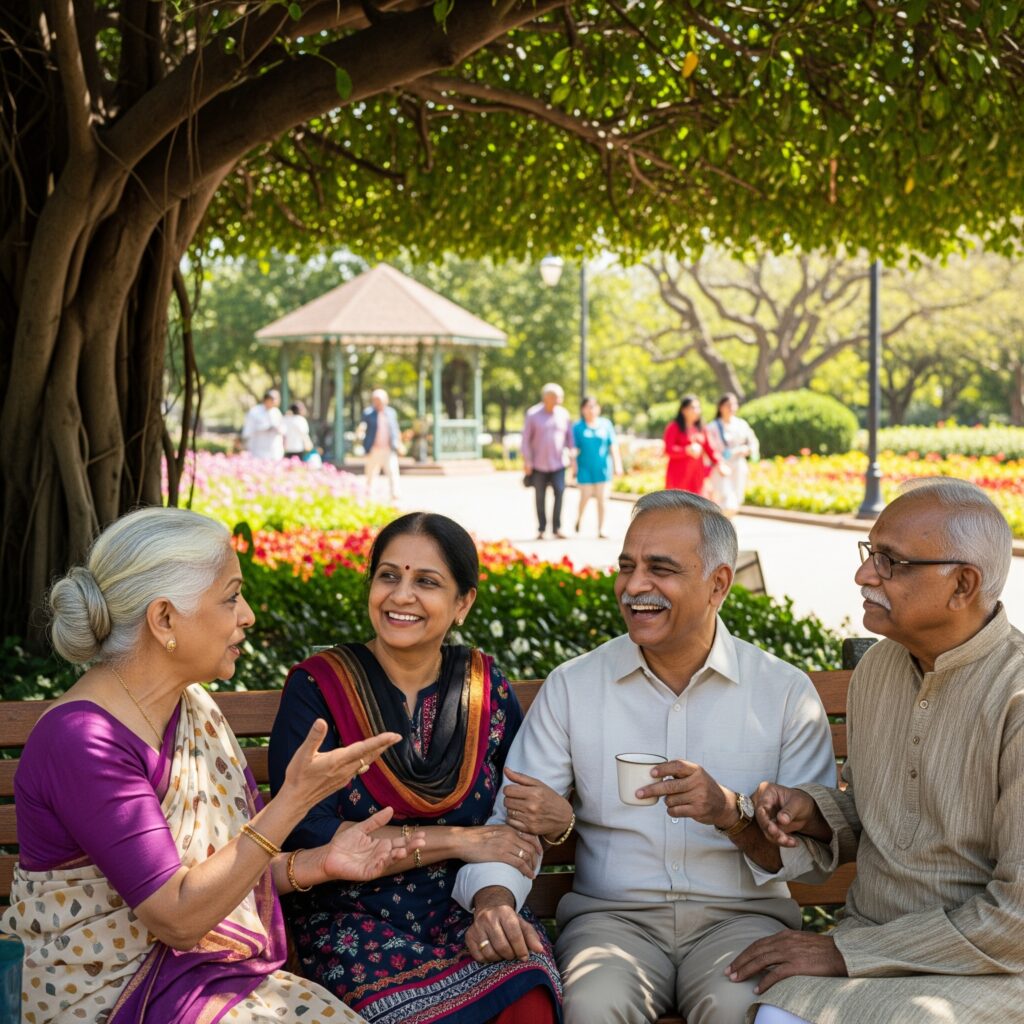
While it’s not accurate to say that there are no social spaces specifically designed for post-retirement life in India, it’s correct that there is a huge scarcity. The reality is that the available options are insufficient to meet the growing need and this is a significant concern given India’s rapidly aging population.
Here’s a breakdown of the situation, acknowledging this paucity while also highlighting existing avenues and the reasons behind the gap.
ACKNOWLEDGING THE PAUCITY –
- Growing Demand vs. Supply: India’s elderly population (60 years and above) is substantial, currently around 150 million and projected to reach 230 million in the next 10-12 years and 319-347 million by 2050. The infrastructure for social engagement hasn’t kept pace with this demographic shift. Reports suggest a significant gap, with current senior living units at a penetration rate of only about 1%, though projections show a potential for 1.5 million new senior living facilities in the next 10 years.
- Urban Concentration: Most dedicated facilities like modern retirement communities and specialized senior centres tend to be concentrated in metropolitan and larger urban areas. Rural areas, where a significant majority (around 71%) of the elderly population resides, often lack such formal social infrastructure.
- Accessibility and Affordability: Many of the well-equipped senior living communities that offer extensive social amenities can be expensive, putting them out of reach for a large segment of the retired population. Publicly funded or community-run spaces that are easily accessible and affordable are less common or may lack diverse programming.
- Awareness and Mind-set: There’s still evolving awareness about the importance of dedicated social spaces beyond traditional family setups. The concept of “senior living communities” is sometimes confused with “old age homes” meant for the destitute, though this perception is changing.
- Fragmented Services: Healthcare and social engagement services for seniors often operate in silos. There’s a need for a more integrated approach.
- Inadequate Elder-Friendly Infrastructure: Beyond dedicated spaces, general public infrastructure (transport, public spaces and buildings) often lacks senior-friendly design (ramps, handrails and accessible toilets), limiting mobility and access to social opportunities.
EXISTING SOCIAL SPACES AND INITIATIVES –
- Retirement Communities: As mentioned, this is a growing sector with players like Antara, Ashiana, Columbia Pacific, Serene Communities, etc., offering amenities that foster social interaction. These are, however, largely private and targeted at those who can afford them.
- NGOs and Community Groups: Organizations like HelpAge India, Agewell Foundation and Dignity Foundation, along with numerous local NGOs, run day care centres, activity centres and helplines and organize social events for seniors.
- In Kolkata: Several NGOs are active, including local branches of national organizations and city-specific groups (e.g., Noah’s Ark, Grecaltes, Emoha Elder Care and Calcutta Rescue) that provide various forms of support, including community and social activities. These can range from cultural immersion, “adda” (conversational gatherings), heritage walks, yoga, meditation and volunteering opportunities.
- Government Efforts:
- The Ministry of Social Justice and Empowerment implements schemes like the “Integrated Programme for Senior Citizens (IPSrC)” which provides grants for running Senior Citizens Homes (Old Age Homes) that are supposed to include recreational facilities.
- The “Atal Vayo Abhyuday Yojana (AVYAY)” is an umbrella scheme for the welfare of senior citizens.
- The Maintenance and Welfare of Parents and Senior Citizens Act, 2007, while primarily focused on maintenance and welfare, also underscores the need for a dignified life for seniors, which includes social well-being.
- The government has also laid down “Minimum Standards for Senior Citizen Homes” to guide their establishment and operation.
- Informal Spaces:
- Parks and Public Places: Especially in urban areas like Kolkata, parks serve as vital informal social hubs for morning walks, laughter clubs and general interaction.
- Religious and Spiritual Centres: These continue to be important places for social gathering and community bonding for many seniors.
- Family and Neighbourhood Ties: Traditional support systems, though evolving, still provide a degree of social connection.
REASONS FOR THE PAUCITY AND CHALLENGES –
- Rapid Demographic Transition: India is aging rapidly and policy and infrastructure development often lag behind such swift demographic shifts.
- Focus on Youth: For a long time, India’s demographic dividend (large youth population) was the primary focus, with less policy emphasis on the needs of the growing elderly cohort.
- Erosion of Traditional Systems: The decline of the joint family system and increased migration of younger generations for work mean more elderly are living alone or feeling isolated, increasing the need for external social support systems.
- Economic Factors: Many elderly individuals lack adequate financial security and pensions, limiting their ability to pay for private social facilities.
- Digital Divide: While technology can aid social connection, a significant portion of the elderly population lacks digital literacy, excluding them from online communities and digitally accessed services.
THE WAY FORWARD –
Addressing the paucity of social spaces requires a multi-pronged approach involving government, private sector, NGOs and community participation. This includes:
- Increased public investment in accessible and affordable senior centres and recreational facilities.
- Promoting age-friendly cities with inclusive public spaces.
- Supporting NGOs and community-led initiatives.
- Raising awareness about the importance of social engagement for healthy aging.
- Developing more diverse and culturally relevant programs catering to varied interests.
- Bridging the digital divide for seniors.